Filed under:
Assuming you have been awake and paying attention over the past few years, you’ve likely heard of Semaglutide medications like Ozempic, Wegovy, etc.
Semaglutide is a medication that belongs to a class of drugs known as GLP-1 receptor agonists. Basically, Semaglutide is a synthetic (man-made) version of a hormone that your body naturally produces called GLP-1. It works by mimicking the natural actions of GLP-1 in the body.
Recently, in the wake of the Ozempic craze, there are a ton of new “GLP-1 Supplements” coming out. Clients ask me “should I take this??”… so let’s break down what GLP-1 is in the first place and how these supplements differ from the Semaglutide meds (and if you really need them).
What is GLP-1?
Overview of GLP-1:
GLP-1 (Glucagon-like peptide-1) is a hormone that plays a key role in regulating blood sugar levels and appetite. It is produced in the gut, specifically by the intestinal L-cells, in response to eating. Here’s how it works:
- GLP-1 tells the pancreas to release insulin when blood sugar levels rise after eating, which helps lower blood sugar. It also limits the release of glucagon, a hormone that raises blood sugar levels, which also helps to keep blood sugar levels stable.
- GLP-1 slows the movement of food from the stomach to the small intestine, leading to a slower and more sustained rise in blood sugar levels (this is a good thing – rather than a sharp spike 📈, we’re talking about a slow wave up and gentle ease back down 〜), which also promotes a more lasting feeling of fullness.
- (Think: the difference between eating a piece of toast on it’s own – satiates fullness for a bit but not long – versus having toast with an egg on it which will keep you fuller for longer).
- This then all signals to the brain that you are satisfied and content.
What supports normal GLP-1 production?
This is where the non-glamorous nutrition information comes in. What I mean is that everyone wants there to be flashy things that need to be done to support their health, when in reality, it’s usually the pretty boring recommendations that, when done consistently, make the biggest difference.
How do we help our bodies produce normal levels of GLP-1?
- Get high fiber foods on your plate – Fruits, vegetables, and whole grains contain soluble fibers, which slow digestion and enhance GLP-1 secretion. Fiber also helps with gut health by feeding our good bacteria, which is crucial since GLP-1 is produced in the intestines.
- Include protein in each meal (as much as you can) – Protein has been found to significantly stimulate GLP-1 release, which can enhance insulin secretion and reduce postprandial blood glucose levels.
- Don’t skip the fat – Fats, especially unsaturated fats, can promote GLP-1 secretion. Incorporating things like avocados, olive oil, and fatty fish into meals can have a positive impact.
- Move your body – Normal physical activity, particularly aerobic exercise, has been shown to enhance GLP-1 secretion and improve insulin sensitivity.
- Support sleep and stress levels – Inadequate sleep and chronic stress can hinder GLP-1 secretion. Prioritizing good sleep hygiene and stress-relief practices (such as meditation, yoga, or mindfulness) can support healthy GLP-1 levels.
Were you expecting a different list? Something more exciting? The truth is, that these are all pretty basic approaches to staying full and having well-rounded meal. They are also all included in the intuitive eating principles!
Quick note about diabetes:
In people with Type 2 Diabetes (T2D) and insulin resistance, GLP-1 may be diminished or less affective (which then makes sense why semaglutide meds were originally created for diabetics… the weight loss that came with it was a side effect that people then got excited about).
How do GLP-1 Supplements Compare to Meds like Ozempic?
So, if semaglutides are synthetic GLP-1, what are the new supplements we’re seeing everywhere? Are they the same thing?
No.
How these supplements are being advertised ⬇️ (spoiler, they’re extremely expensive!!)
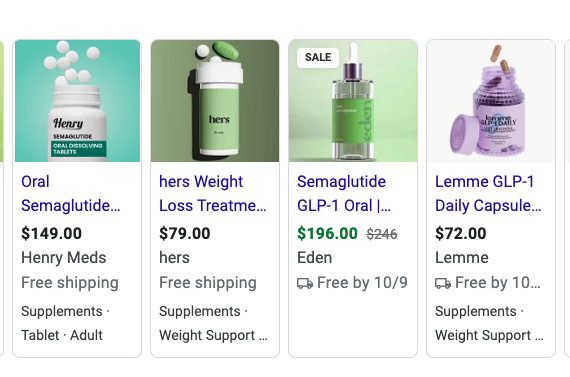
These supplements are herbal combinations that companies claim support the body’s natural GLP-1 production by enhancing gut health, improving blood sugar regulation, and stimulating GLP-1 secretion from intestinal cells.
In my opinion, they are also most certainly cash grabs. The fact that Kourtney Kardashian’s company (Lemme) is selling a version now kind of tells us all we need to know about that.
But we also need to look at the fine print (this is from the Lemme site):
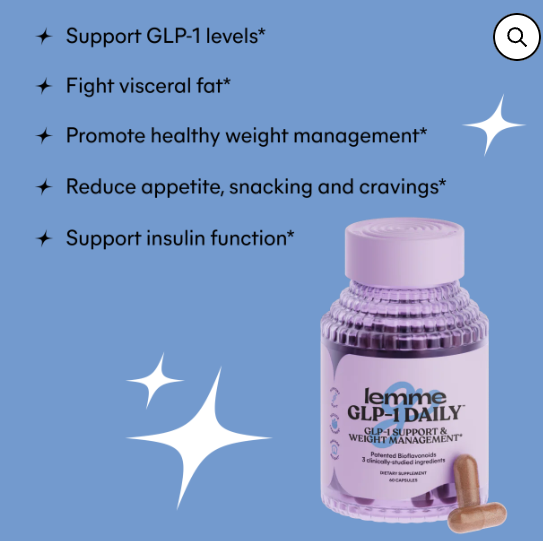

See all of the stars and the little cross symbol? When you scroll alllll the way to the bottom of the page (this actually took me like 3 mins to find), you then see this:
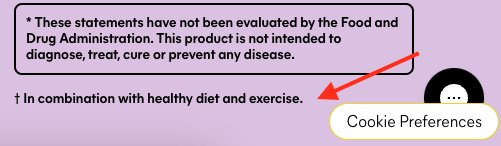
A few thoughts here:
- I think that many people forget that herbal supplements are NOT regulated well at all and it is important to work with a provider to make sure you are taking the right things and that anything you are taking will not be contraindicated or harmful for you.
- For example, some of these “GLP-1 promoting” supplements have berberine in them which I, as a licensed dietitian nutritionist, may use with SOME clients with high blood sugar and high cholesterol. But berberine could be harmful for someone who does not have these things (for example: lower glucose levels TOO much) and it can also have a potential negative impact on your gut bacteria (which, ironically, is very important for GLP-1 production!).
- There are also medications that cannot be taken with certain herbs, which should be reviewed and monitored closely.
- Supplements can be great, but we shouldn’t be taking them willy nilly. It can be harmful. We should also always tell our providers what we are taking and make sure we are getting them from reputable companies.
- This site literally has a disclaimer that these meds help with hunger and fat reduction “in combination with healthy diet and exercise.” Lol. Ok.
- So, is it the $75 a month supplement that’s helping or the changes in eating and movement which we saw above have a big impact on GLP-1 secretion?
- Lastly, I’m not saying that these herbs are totally bogus… i’m just saying we need to think about things a little more deeply here. And it’s NEVER as simple as a magic pill.
We all want a magic pill… Are GLP-1 supplements it?
If you have been struggling with your relationship with food and your body, it makes sense that these supplements would appeal to you. I’m sure the ad algorithm has figured that out by now and has been really pushing them on you!
Diet culture THRIVES on telling us that there is something wrong with our bodies (i.e. right now the buzzword is GLP-1 and people don’t even know what it means) and then selling us something to FIX it quickly. And then if it fails, we blame our bodies instead of the diet or diet pill.
Be careful about diet culture with a cute spin and a bow on it.
Ask questions, talk to your health care providers (and ask them about actual research!) And if you’re struggling with your relationship with food… maybe it’s time to Do The Work and talk about what’s really going on. It’s not as flashy as a Kourtney Kardashian supplement, but it’s definitely worth the time and effort.
Leave a Reply
1500 Chestnut St. Suite 2 #1337, Philadelphia, PA 19102
virtual nutrition counseling
111 N Wabash Ave #3178, Chicago, IL 60602


Hi! I’m Ellen Biemiller, Eating Disorder and ADHD Nutritionist!
I'm here to help you feel more comfortable in your body.
